
I love my jade plants!
Crassula ovata, commonly known as jade plant, lucky plant, money plant or money tree, is a succulent plant with small pink or white flowers that is native to the KwaZulu-Natal and Eastern Cape provinces of South Africa, and Mozambique; it is common as a houseplant worldwide. – Wikipedia
My original jade plant was a gift from my Mom who started it from a plant that she was given by my aunt. Mine has flourished for more than a decade, despite being repotted, moved, trimmed and repositioned over the years. I, in turn, have shared many young jade plants with my family and friends.
The Old Farmers’ Almanac offers this description;
Jade plants are one of several plants with the nickname “money plant” and are seen by some as a sign of good luck and prosperity. With their thick, woody stems and oval-shaped leaves, jade plants have a miniature, tree-like appearance that makes them very appealing for decorative houseplants. They live for a very long time, often passed down from generation to generation, and reach heights of 3 feet or more when grown indoors. (Almanac.com)
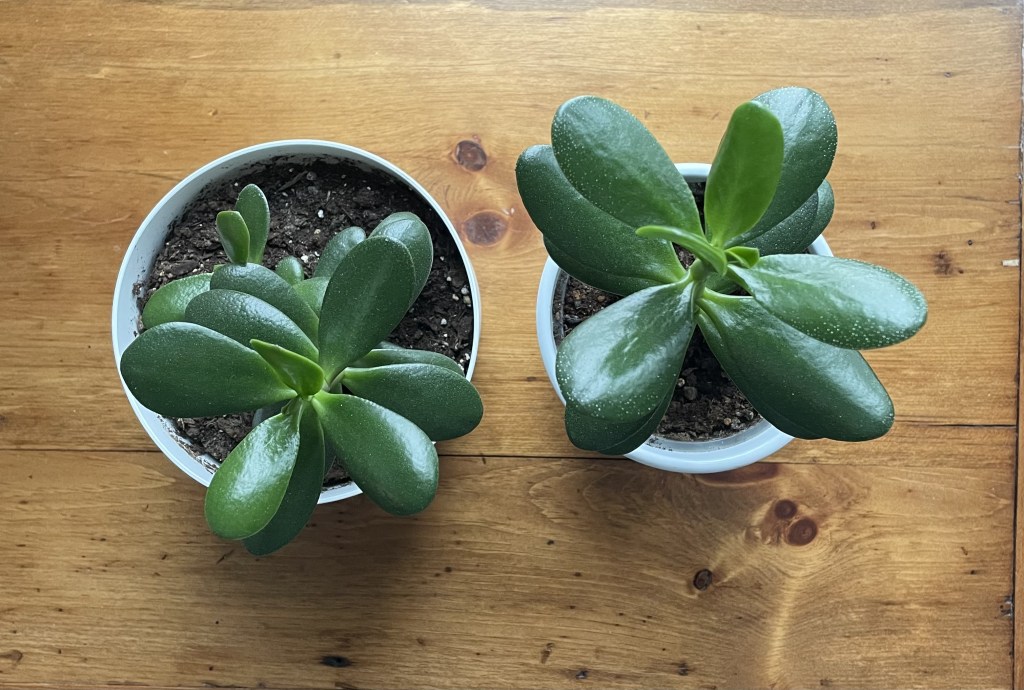
In my experience, jade is a forgiving plant. As a succulent, it can survive when I neglect to water it regularly. Ideally, they should be watered once every two weeks in the spring and summer but only require water after the soil feels dry to touch in the fall and winter months, or about once a month. My rooms are bright and offer warm sunlight from the west-facing windows. I’ve also had success when placing my jade plants in the southern or eastern windows. However, they cannot tolerate the cold!
kellogggarden.com recommends; If you live in cooler zones, you can still grow these succulents outside, but they must be brought indoors before any chance of frost creeps in.

One word of caution though. Jade plants, as like many other plants, are known for their toxicity and ingesting any part of the plant would be harmful and dangerous. Keep them away from pets and small children!
Interesting tips:
- Add coffee grounds to increase the nitrogen in the soil. Nitrogen makes for darker leaves and the stems will be stronger and thicker. (m.economictimes.com)
- A jade plant releases oxygen at night and purifies the air by removing toxins (thenextgardener.com)
- Repot young jade plants once every 2 to 3 years to encourage growth. With older jade, repot once every 4 to 5 years or as necessary. (almanac.com)
- Jade plants should receive at least 6 hours of bright light each day. Young plants should be kept in bright, indirect sunlight; large, well-established jade plants can handle more direct sunlight. (almanac.com)
The farmer in me is called to grow. Every generation of my Dad’s family have been farmers and the desire to grow things has not been lost on me. My heart is overjoyed when seeds emerge from the soil or I successfully propagate new roots from a cutting and the jade plants really do flourish. In my opinion, they are a simple way to grow your own happiness!

Leave a comment